Introduction to Creep Analysis for Engineers
Creep analysis is a critical discipline within structural engineering, focusing on the time-dependent deformation of materials under sustained mechanical stress at elevated temperatures. Unlike elastic or plastic deformation, creep is a viscous, permanent deformation that occurs over prolonged periods, even when stresses are below the material’s yield strength. For engineers working in industries such as aerospace, oil & gas, power generation, and nuclear, where components operate under extreme conditions, understanding and accurately predicting creep behavior is paramount to ensuring structural integrity, safety, and long-term operational reliability.
This article provides a comprehensive, engineer-to-engineer guide to creep analysis, covering its fundamental mechanisms, analytical and computational methods, practical simulation workflows, and essential verification techniques. Our goal is to equip you with the knowledge to confidently integrate creep considerations into your design and fitness-for-service (FFS) assessments, especially when dealing with high-temperature applications.
Understanding Creep Phenomena
Creep is a complex phenomenon driven by a combination of stress, temperature, and time. Its microscopic mechanisms involve atomic diffusion, dislocation climb, grain boundary sliding, and void formation, all contributing to the material’s gradual loss of load-bearing capacity.
Creep Mechanisms
- Dislocation Climb: At elevated temperatures, vacancies become mobile, allowing dislocations to climb out of their slip planes, bypassing obstacles and enabling further plastic deformation.
- Grain Boundary Sliding: Grains within a polycrystalline material slide past each other, particularly pronounced at higher temperatures and lower stresses.
- Diffusion Creep (Nabarro-Herring, Coble): Mass transport occurs via vacancy diffusion either through the crystal lattice (Nabarro-Herring) or along grain boundaries (Coble), leading to shape changes.
- Void Formation and Growth: Under tensile stress, micro-voids can nucleate, typically at grain boundaries, and grow, eventually leading to rupture.
Creep Stages
The creep curve, plotting strain versus time under constant stress and temperature, typically exhibits three distinct stages:
- Primary Creep (Transient Creep): Characterized by a decreasing creep rate. Material hardens due to dislocation interactions, but simultaneously softens due to recovery processes. The net effect initially slows the deformation.
- Secondary Creep (Steady-State Creep): The creep rate becomes nearly constant. A balance is achieved between strain hardening and recovery, resulting in a minimum creep rate. This stage is often the most critical for design, as it represents the longest duration of the component’s life.
- Tertiary Creep (Accelerating Creep): The creep rate increases rapidly, leading to ultimate rupture. This stage is driven by microstructural changes such as void formation, necking, and crack propagation, reducing the effective cross-sectional area and accelerating local stresses.
Factors Influencing Creep
- Temperature: The most significant factor. Creep is exponentially dependent on temperature; even small increases can drastically reduce component life.
- Applied Stress: Higher stresses accelerate creep rates and shorten creep life.
- Time: Creep is inherently a time-dependent process.
- Material Properties: Alloy composition, microstructure (grain size, precipitates), heat treatment, and prior cold work all profoundly affect creep resistance. Materials with high melting points, stable microstructures, and large grain sizes generally exhibit better creep resistance.
Why Creep Analysis is Critical
Neglecting creep in design can lead to catastrophic failures, costly downtime, and significant safety risks. For engineers, accurate creep analysis is not just a best practice; it’s a fundamental requirement in numerous high-stakes applications.
Industries Affected
- Oil & Gas: Pipelines, pressure vessels, furnace tubes, and turbine components operating at high temperatures and pressures.
- Aerospace: Jet engine turbine blades, combustors, exhaust systems, and high-temperature structural components.
- Power Generation: Steam turbines, boiler tubes, superheaters, and reactors (conventional and nuclear).
- Chemical Processing: Reactors, heat exchangers, and piping systems handling corrosive and high-temperature fluids.
- Biomechanics: Long-term performance of certain biomedical implants under sustained physiological loads.
Consequences of Neglecting Creep
- Premature Component Failure: Leading to unscheduled shutdowns, production losses, and potential safety hazards.
- Excessive Deformation: Components may deform to an extent that interferes with adjacent parts or compromises functional requirements (e.g., turbine blade tip clearance).
- Reduced Efficiency: Distorted geometries can reduce aerodynamic or fluid dynamic efficiency.
- High Maintenance Costs: Frequent replacement of creep-damaged components.
- Safety Risks: Catastrophic rupture of pressure-retaining components.
Creep Material Models for Engineering Analysis
Accurate creep analysis relies heavily on robust material models that capture the time-dependent deformation behavior. These models range from empirical formulations to more complex constitutive equations.
Phenomenological Creep Models
These models are empirically derived from experimental creep data and are widely used in engineering. They typically describe the secondary (steady-state) creep rate as a function of stress and temperature.
- Norton’s Power Law: Often the simplest and most common for secondary creep. It states that the steady-state creep rate (
ε̇_ss) is proportional to a power of stress (σ):ε̇_ss = A σ^n, whereAandnare material constants dependent on temperature. Extended forms include temperature dependency via an Arrhenius term. - Blackburn Equation: An extension to Norton’s law that can include primary creep. It often takes the form
ε = ε_0 + A t^m + B t, whereε_0is instantaneous strain,A t^mmodels primary creep, andB tmodels secondary creep. - Time Hardening & Strain Hardening Laws: These models generalize the creep rate to be dependent on either time (time hardening) or accumulated creep strain (strain hardening). Strain hardening is generally preferred for variable stress conditions as it considers the material’s history.
Viscoplasticity Models
More advanced models integrate creep, plasticity, and strain rate sensitivity into a single framework. They are often referred to as unified creep-plasticity models and are crucial for complex loading scenarios, including creep-fatigue interaction.
- Bodner-Partom Model: A rate-dependent constitutive model that describes both time-independent plastic deformation and time-dependent creep deformation using internal state variables.
- Chaboche Model: A family of unified viscoplastic models widely implemented in FEA software, capable of capturing primary, secondary, and tertiary creep, as well as cyclic plasticity and anisotropic hardening.
- Prandtl-Reuss Flow Rule with Viscous Term: Often extended to incorporate viscous effects for creep, linking plastic strain rate to deviatoric stress and a material’s viscosity.
The choice of material model significantly impacts the accuracy and computational cost of the analysis. It’s crucial to select a model that aligns with the material’s actual behavior and the specifics of the loading conditions. EngineeringDownloads.com offers downloadable templates and guidelines for material model selection in various engineering contexts.
| Creep Material Model | Description | Typical Application | Pros | Cons |
|---|---|---|---|---|
| Norton’s Power Law | Steady-state creep rate depends on stress raised to a power, with temperature dependency. | Estimating secondary creep life, initial design checks. | Simple, computationally efficient, few parameters. | Ignores primary & tertiary creep, limited for variable stress. |
| Time Hardening | Creep strain rate is a function of current stress, temperature, and elapsed time. | Constant stress/temperature conditions where primary creep is important. | Captures primary creep, relatively straightforward. | Can be inaccurate for complex load histories. |
| Strain Hardening | Creep strain rate is a function of current stress, temperature, and accumulated creep strain. | Variable stress/temperature conditions, more realistic load histories. | Better for varying loads, physically more representative than time hardening. | Requires more computation, sensitive to initial conditions. |
| Chaboche Model | Unified viscoplastic model capturing primary, secondary, tertiary creep, and plasticity. | Complex cyclic loading, creep-fatigue interaction, advanced FFS. | Comprehensive, highly accurate for complex scenarios, robust. | Many parameters, complex calibration, computationally intensive. |
Computational Creep Analysis using FEA
For most real-world engineering problems involving complex geometries, heterogeneous stress states, and variable loading, Finite Element Analysis (FEA) is the indispensable tool for creep analysis. Software like Abaqus and ANSYS Mechanical provide powerful capabilities for simulating time-dependent deformation.
FEA Workflow for Creep Analysis
Geometry and Meshing (CAD-CAE Workflow)
- CAD Model Preparation: Simplify complex CAD geometries by removing small features (fillets, holes) irrelevant to global creep behavior to reduce mesh size and computational cost. Ensure clean surfaces and manifold topology. Tools like CATIA, SolidWorks, or Inventor are typically used.
- Mesh Generation: Generate a high-quality mesh. Finer meshes are required in areas of high-stress gradients or potential creep localization (e.g., notches, welds). Use appropriate element types: solid elements (e.g., hexahedral or tetrahedral) for 3D components, shell elements for thin-walled structures, and beam elements for slender components. Ensure mesh refinement studies are conducted.
Material Properties Input
- Elastic Properties: Young’s Modulus, Poisson’s Ratio (temperature-dependent).
- Plastic Properties: Stress-strain curves (if plasticity is considered alongside creep).
- Creep Properties: Parameters for the chosen creep model (e.g., A, n, Q for Norton’s Law, or parameters for more complex viscoplastic models). These are typically temperature-dependent and derived from extensive experimental testing (e.g., uniaxial creep tests).
Loading and Boundary Conditions (BCs)
- Applied Loads: Define sustained mechanical loads (pressure, force, moment) and thermal loads (temperature profiles). Creep is sensitive to the duration and magnitude of these loads.
- Boundary Conditions: Apply appropriate constraints to prevent rigid body motion and accurately represent supports. Consider thermal expansion effects if the temperature is non-uniform.
Solver Settings
- Analysis Type: Typically a time-dependent, non-linear static or transient analysis.
- Time Stepping: Critical for accuracy and convergence. Use an automatic time-stepping algorithm if available, allowing the solver to adjust step size based on convergence criteria and creep strain increments. Define initial and maximum time step sizes.
- Convergence Criteria: Set appropriate force, displacement, and energy convergence tolerances. Non-linear creep analysis often requires tighter tolerances.
- Initial Conditions: Define initial temperature and stress states.
Post-Processing and Interpretation
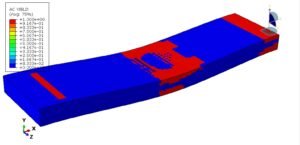
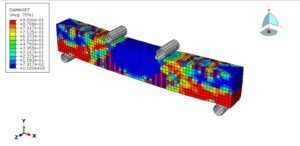
- Creep Strain Distribution: Visualize total creep strain, equivalent creep strain, and individual creep strain components over time. Identify areas of high creep accumulation.
- Stress Redistribution: Due to creep, stresses can redistribute over time. Elastic stress concentrations tend to relax, while stresses in initially lower-stressed regions may increase.
- Deformation/Displacement: Track deflections and compare against allowable limits.
- Creep Rupture Life: Use post-processing tools to estimate rupture life based on accumulated creep damage or ductility exhaustion criteria.
Practical Workflow for Creep Analysis
Executing a successful creep analysis project requires a systematic approach. Here’s a step-by-step practical workflow:
Step 1: Problem Definition and Data Collection
Clearly define the objective of the analysis. Is it for design verification, FFS assessment, or failure investigation?
- Operating Conditions: Document full temperature and pressure/load profiles over the component’s expected life.
- Material Data: Obtain comprehensive material data, including temperature-dependent elastic properties, plastic properties (if applicable), and creep constants from material databases, standards (e.g., ASME, API), or experimental tests.
- Geometric Data: Accurate CAD models and manufacturing tolerances.
- Failure Criteria: Define acceptable deformation limits, creep rupture criteria, or fatigue-creep interaction limits.
Step 2: Material Model Selection and Calibration
Based on the material and operating conditions, select the most appropriate creep or viscoplastic model.
- Review Experimental Data: Uniaxial creep curves (strain vs. time at constant stress/temperature) are essential for parameter calibration.
- Parameter Fitting: Use curve-fitting tools (often integrated into FEA pre-processors or external scripts in Python/MATLAB) to derive the constants for your chosen creep model from experimental data.
- Sensitivity: Understand the sensitivity of the model parameters to variations in temperature and stress.
Step 3: Pre-Processing (Geometry, Mesh, Boundary Conditions)
- Simplify Geometry: Remove insignificant features.
- Mesh Generation: Create a high-quality mesh, paying attention to element type, aspect ratio, and refinement in critical areas. Consider using features like mesh seeding and mapped meshing.
- Apply Loads & BCs: Accurately represent thermal and mechanical loads. Use ramped loads if the initial application of load is not instantaneous to avoid spurious transient effects.
Step 4: Solver Setup and Execution
- Choose Analysis Type: Select a time-dependent non-linear static or transient analysis.
- Define Time Steps: Start with a relatively small initial time step, then use automatic time stepping. Monitor convergence closely.
- Non-Linear Settings: Enable large deformation effects if necessary, especially for components undergoing significant distortion.
- Output Requests: Specify outputs for creep strain, total strain, stress, displacement, and reaction forces at regular intervals to capture the creep history.
Step 5: Post-Processing and Interpretation
- Visualize Results: Review contours of equivalent stress (von Mises), equivalent creep strain, and total displacement over time.
- Plot Time Histories: Extract plots of creep strain, stress, and displacement at critical locations (e.g., maximum stress points, areas prone to rupture).
- Check for Rupture: Compare accumulated creep strain or stress-rupture predictions against material limits.
- Generate Reports: Document key findings, assumptions, limitations, and recommendations.
Verification & Sanity Checks for Creep Analysis
Rigorous verification is crucial for building confidence in your creep analysis results. This is where engineering judgment and experience come into play.
Mesh Sensitivity Study
Perform the analysis with progressively finer meshes, especially in high-stress gradient regions. The results (e.g., max creep strain, max displacement) should converge to a stable value. If not, further mesh refinement is needed.
Time Step Sensitivity
Vary the time step size (initial, minimum, maximum) and monitor its effect on the solution stability and accuracy. Too large a time step can lead to inaccurate creep strain accumulation or non-convergence. Too small can be computationally prohibitive. Automatic time stepping usually handles this, but manual checks are still valuable.
Boundary Condition Influence
Carefully review applied boundary conditions. Small changes can sometimes significantly alter stress distributions and creep behavior. Perform sensitivity studies on uncertain BCs.
Comparison to Analytical or Experimental Data
If possible, validate your FEA model against simplified analytical solutions for canonical problems (e.g., a thick cylinder under internal pressure) or, ideally, against experimental creep test data for the actual component or a representative specimen. This provides the strongest validation.
Energy Checks and Equilibrium
Most FEA solvers provide energy output. Monitor energy balance to ensure the solution is physically consistent. Check that reaction forces balance applied loads.
Review Material Properties
Double-check the input creep material properties and their temperature dependency. Small errors here can lead to large discrepancies in creep life predictions.
Check for Instabilities
Monitor for signs of numerical instability, such as wildly fluctuating results, large numbers of iterations for convergence, or non-physical stress/strain distributions. This often points to issues with mesh quality, time step, or material model parameters.
Integration with Fitness-for-Service (FFS) Level 3 Assessments
Creep analysis is often a cornerstone of FFS Level 3 assessments, particularly for aging infrastructure in industries like Oil & Gas and Power Generation. When components exhibit signs of damage or have exceeded their original design life, FFS methodologies (e.g., API 579 / ASME FFS-1) guide engineers in determining if they can continue safe operation.
- Creep Damage Assessment: FEA results provide local stress and strain histories, which can be fed into creep damage models (e.g., Kachanov-Rabotnov, ductility exhaustion) to predict remaining life.
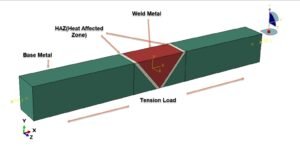
- High-Temperature Weldments: Weld regions often exhibit different creep properties than base material and are prone to Type IV cracking. FEA with heterogeneous material properties is critical here.
- Defect Assessment: For components with existing flaws (cracks, voids), creep analysis can predict crack growth rates under sustained load at elevated temperatures.
For complex FFS assessments requiring advanced simulation techniques, EngineeringDownloads.com provides expert online consultancy and tutoring.
Advanced Topics and Automation in Creep Analysis
Creep-Fatigue Interaction
Many high-temperature components experience both cyclic loading (fatigue) and sustained loading (creep). The interaction between these two damage mechanisms is complex and often synergistic, meaning the combined damage is greater than the sum of individual damages. Advanced constitutive models (like Chaboche) and damage accumulation rules are used to address this interaction, often through specialized FEA routines.
Python & MATLAB for Parametric Studies and Post-Processing
To efficiently explore the design space, perform sensitivity analyses, or automate post-processing tasks, Python and MATLAB are invaluable. Scripting capabilities allow engineers to:
- Automate FEA Workflows: Generate input files, submit analyses, and extract results from software like Abaqus or ANSYS Mechanical.
- Parametric Studies: Easily vary material properties, geometry parameters, or loading conditions to study their impact on creep behavior.
- Custom Post-Processing: Develop custom scripts to calculate specific creep damage parameters, plot complex data, or integrate with other analytical tools.
- Material Model Calibration: Fit experimental creep data to constitutive equations more efficiently.
EngineeringDownloads.com offers Python scripts and MATLAB functions designed for automating various engineering simulation tasks, including material parameter fitting and results extraction.
Conclusion
Creep analysis is an indispensable tool in the modern engineer’s arsenal, particularly for components operating in high-temperature environments. By thoroughly understanding the underlying creep mechanisms, leveraging advanced computational tools like Abaqus and ANSYS Mechanical, and adhering to rigorous verification protocols, engineers can confidently design for long-term structural integrity and ensure the safe operation of critical assets. Mastering this discipline directly contributes to extending asset life, preventing failures, and optimizing operational costs across various demanding industries.