Concrete is a fundamental material in civil and structural engineering, yet its behavior under load is notoriously complex. From bridges to high-rise buildings, understanding how concrete performs is critical for safety, durability, and cost-effective design. This complexity makes accurate concrete modeling in Finite Element Analysis (FEA) an essential skill for modern engineers.
This guide dives into the practical aspects of simulating concrete, offering a clear, engineer-to-engineer approach. We’ll explore material models, practical workflows, common challenges, and crucial verification steps to ensure your simulations are robust and reliable.

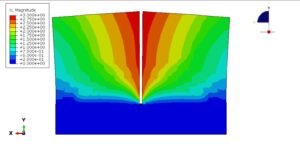
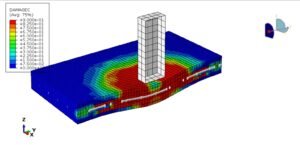
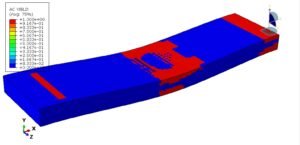
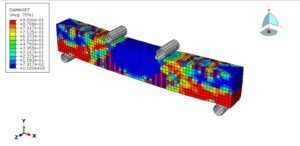
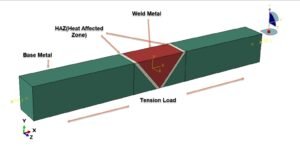
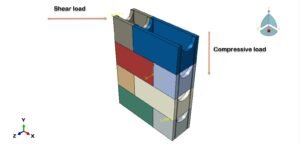
Image: Visualizing concrete failure modes is key to effective modeling.
Why Concrete Modeling Matters in Engineering
Concrete structures are ubiquitous, but predicting their response to various loads, environmental conditions, and time-dependent effects requires sophisticated analysis. Traditional hand calculations or simplified methods often fall short when dealing with non-linear behavior, cracking, crushing, and complex geometries.
The Challenges of Concrete Behavior
- Non-Linearity: Concrete’s stress-strain relationship is non-linear, especially beyond its elastic limit.
- Brittle Failure: While strong in compression, concrete is weak in tension and prone to brittle cracking.
- Damage Accumulation: Micro-cracking and damage evolve throughout the loading history.
- Time-Dependent Effects: Creep, shrinkage, and fatigue significantly influence long-term performance.
- Anisotropy/Heterogeneity: Its composite nature (aggregate, cement paste, voids) can lead to localized variations.
Benefits of Advanced Simulation
Leveraging FEA for concrete modeling provides substantial advantages:
- Design Optimization: Fine-tune structural designs for efficiency and material usage.
- Performance Prediction: Accurately predict crack patterns, failure modes, and ultimate load capacity.
- Forensic Analysis: Understand the causes of existing structural failures.
- Cost and Time Savings: Reduce the need for expensive physical prototypes and destructive testing.
- Enhanced Safety: Ensure designs meet stringent safety standards under extreme conditions, crucial for structural integrity assessments in sectors like Oil & Gas.
Fundamentals of Concrete Material Models
At the heart of any accurate concrete simulation lies the material model. These mathematical representations capture the complex physical behavior of concrete under various loading conditions.
Constitutive Models Explained
FEA software packages like Abaqus and ANSYS Mechanical offer a range of sophisticated material models specifically designed for concrete. The choice depends on the specific problem you’re trying to solve and the level of detail required.
Concrete Damaged Plasticity (CDP) Model
This is arguably the most widely used and robust model for concrete. It combines plasticity and damage mechanics to describe both compressive crushing and tensile cracking. Key features:
- Plastic Flow: Governed by a yield surface (e.g., Drucker-Prager or Lubliner criterion).
- Damage Parameters: Scalar damage variables evolve with plastic strains, reducing stiffness as damage accumulates.
- Tensile Stiffening/Softening: Accounts for load transfer across cracks (tension stiffening) and progressive crack opening (tension softening).
- Compressive Hardening/Softening: Captures the non-linear behavior in compression.
Brittle Cracking Model
A simpler model suitable for scenarios where tensile cracking is the dominant failure mode and compressive crushing is less critical. It typically uses a smeared crack approach, distributing cracks over elements.
Other Models
More specialized models include microplane models, multi-surface plasticity, and various continuum damage mechanics approaches, each with its own strengths and computational costs.
Key Material Properties
Accurate input of concrete properties is paramount. Here’s a table of common properties you’ll need, along with their significance:
| Property | Description | Typical Range (Illustrative) | Impact on Model |
|---|---|---|---|
| Young’s Modulus (E) | Stiffness, initial elastic response | 25-45 GPa | Deformation under load |
| Poisson’s Ratio (ν) | Transverse deformation due to axial strain | 0.15-0.25 | Volumetric changes, lateral expansion |
| Compressive Strength (f’c) | Ultimate stress in compression | 20-60 MPa | Crushing behavior, ultimate capacity |
| Tensile Strength (ft) | Stress at which concrete cracks | 2-5 MPa (approx. 0.1 * f’c) | Initiation of cracking |
| Fracture Energy (Gf) | Energy required to create a unit area of crack | 50-200 N/m | Post-cracking behavior, crack propagation |
| Dilation Angle | Measure of plastic volumetric expansion (CDP) | 20-40 degrees | Shear behavior, confinement effects |
These values can be obtained from material tests, design codes (e.g., ACI 318, Eurocode 2), or industry standards. Always ensure consistency between your chosen material model and the properties you input.
Common Modeling Approaches
- Macro-modeling (Continuum): Treats concrete as a homogeneous material at a larger scale. This is the most common approach for structural analysis.
- Meso-modeling: Explicitly models aggregate, mortar, and the interfacial transition zone (ITZ) at a smaller scale. Computationally expensive, often used for research.
- Micro-modeling: Focuses on the hydration process and formation of the microstructure. Primarily a research tool.
Practical Workflow for Concrete FEA
A structured approach is key to successful concrete modeling. Here’s a typical workflow you can follow:
1. Defining Geometry and Meshing
- CAD Import: Start with a clean CAD model (e.g., from CATIA or other CAD software). Simplify complex features that won’t significantly impact structural behavior.
- Element Types: For 3D concrete structures, solid elements (e.g., 8-node brick elements – C3D8R in Abaqus, SOLID186 in ANSYS) are common. For shells or plates, shell elements (S4R in Abaqus, SHELL181 in ANSYS) can be used for simplification where appropriate.
- Mesh Density: Concrete’s non-linear behavior, especially cracking, is highly sensitive to mesh size. Finer meshes are needed in areas of expected stress concentration or crack initiation. Consider mesh transition techniques to manage computational cost.
2. Material Property Assignment
- Elastic Properties: Input Young’s Modulus and Poisson’s ratio.
- CDP Parameters: Define the plasticity and damage parameters. This involves inputting stress-strain curves for compression and tension, as well as parameters for dilation, eccentricity, and viscosity. Refer to your software’s documentation for precise definitions.
- Reinforcement: Model rebar as either discrete truss/beam elements embedded within the concrete or using a smeared reinforcement approach (typically in plate/shell elements). Ensure proper bond definitions or constraints between concrete and rebar.
3. Applying Loads and Boundary Conditions
- Load Cases: Define all relevant loads: gravity, dead loads, live loads, wind, seismic, thermal, prestress, etc.
- Boundary Conditions (BCs): Accurately represent supports (fixed, pinned, roller), contact conditions, and symmetry planes. In structural engineering, these are often defined based on design drawings.
- Contact: If your model involves multiple concrete parts or concrete interacting with other materials (e.g., steel plates), define appropriate contact properties (friction, separation, pressure-overclosure).
4. Solver Settings and Convergence
- Solver Type: For non-linear concrete analysis, an implicit solver (e.g., in Abaqus/Standard, ANSYS Mechanical) with Newton-Raphson iteration is common. For highly dynamic events or severe instabilities, an explicit solver (Abaqus/Explicit) might be considered, though it often requires more careful mass scaling.
- Time Stepping: Use small time increments for highly non-linear phases (e.g., crack initiation and propagation) to aid convergence. Automatic time stepping algorithms are often helpful.
- Convergence Criteria: Define reasonable force, displacement, and energy tolerances. Concrete models often require looser tolerances than linear elastic problems, but too loose can lead to inaccurate results.
Tools of the Trade
Leading FEA software suites for concrete modeling include:
- Abaqus: Widely recognized for its robust Concrete Damaged Plasticity (CDP) model and advanced non-linear capabilities.
- ANSYS Mechanical: Offers a range of concrete models, including smeared crack, multi-linear isotropic, and specialized damage models.
- MSC Patran/Nastran: Provides material models for concrete, often integrated with structural analysis workflows.
Verification & Sanity Checks for Robust Models
Garbage in, garbage out. Rigorous verification is non-negotiable for reliable concrete simulations.
1. Mesh Quality Assessment
- Element Distortion: Check for highly distorted elements (poor aspect ratio, skewness, Jacobian values). These can lead to inaccurate stress/strain calculations and convergence difficulties.
- Mesh Sensitivity: Run the model with different mesh densities. The results (e.g., peak stress, displacement) should converge to a stable value as the mesh is refined.
- Crack Path Alignment: Ensure a sufficiently fine mesh in potential crack regions to capture crack propagation accurately.
2. Boundary Condition Review
- Correct Application: Double-check that all loads and constraints are applied at the correct locations and with the right magnitudes/directions.
- Reaction Forces: Sum the reaction forces at supports and compare them to the total applied load (equilibrium check).
- Rigid Body Motion: Ensure the model is adequately constrained to prevent rigid body motion, which often leads to immediate divergence.
3. Convergence Criteria Monitoring
- Iteration History: Monitor the force and displacement residuals during the analysis. If they oscillate wildly or fail to drop below the specified tolerance, adjust solver settings (e.g., smaller time steps, increased maximum iterations) or review material parameters.
- Energy Balance: For explicit analyses, check the ratio of kinetic energy to internal energy. It should be small (typically <5-10%) for quasi-static problems.
4. Validation Against Experimental Data/Analytical Solutions
- Benchmark Problems: Compare your model’s predictions against well-documented experimental results for similar concrete specimens (e.g., beam bending, cylinder compression tests).
- Simplified Analytical Models: For basic components, compare displacements and stresses with hand calculations or simplified analytical solutions (if applicable within the elastic range).
5. Sensitivity Analysis
- Material Parameters: Vary critical material properties (e.g., tensile strength, fracture energy) within their expected ranges to understand their influence on the results. This helps identify the most sensitive inputs.
- Geometric Variations: Explore the impact of small changes in geometry or support conditions.
Common Challenges and Troubleshooting Tips
Convergence Issues
These are frequent in non-linear concrete analysis due to the sudden stiffness changes associated with cracking and crushing.
- Tip 1: Reduce Increment Size: Start with very small initial increments or use automatic time stepping.
- Tip 2: Add Viscosity: Introduce a small amount of viscous damping (e.g., in CDP models) to regularize the response and improve convergence. This can smooth out abrupt changes but should be kept minimal to avoid physical inaccuracy.
- Tip 3: Check Material Input: Ensure stress-strain curves are smooth and continuous. Discontinuities can cause problems.
- Tip 4: Review BCs/Loads: Ensure no sudden application of large loads or conflicting boundary conditions.
Material Model Selection Pitfalls
- Over-Complication: Don’t use a highly complex model if a simpler one suffices. Start basic and increase complexity only if necessary.
- Parameter Sourcing: Using default parameters without understanding their origin or suitability for your specific concrete mix can lead to inaccurate results. Always use reliable sources for material data.
- Strain Localization: Concrete models can exhibit strong mesh dependency in crack paths. Consider regularization techniques or fracture energy-based models to mitigate this.
Post-Processing and Interpretation
- Crack Patterns: Visualize damage parameters (e.g., tensile damage, compressive damage) to identify crack initiation and propagation. Ensure they align with expected failure modes.
- Stress/Strain Distribution: Examine stress and strain contours carefully. Look for unexpected concentrations or unrealistic values.
- Displacements: Verify that displacement magnitudes and directions are reasonable.
- Force-Displacement Curves: Plot global force-displacement curves to observe overall structural behavior and identify peak loads or post-peak softening.
Advanced Topics and Future Trends
Concrete modeling is a continuously evolving field:
Reinforcement Modeling
For more accurate results, especially in complex reinforced concrete (RC) structures, the interaction between concrete and rebar is critical. Advanced methods include:
- Embedded Elements: Modeling rebar as truss or beam elements embedded within solid concrete elements, assuming perfect bond or defining slip characteristics.
- Discrete Rebar: Explicitly meshing rebar elements and connecting them to concrete using contact surfaces or tie constraints.
- Fiber Models: Often used in beam-column elements for global structural analysis, where the cross-section is divided into concrete and rebar fibers.
Fatigue and Creep Analysis
For long-term performance and durability (critical in Oil & Gas infrastructure), considering fatigue (repeated loading) and creep (time-dependent deformation under sustained load) becomes essential. These often require specialized material models and transient analyses.
Python & MATLAB for Automation
Scripting languages like Python (e.g., Abaqus Python API) and MATLAB are invaluable for automating concrete modeling tasks:
- Parametric Studies: Easily vary material properties, geometry, or load cases to perform sensitivity analyses.
- Pre-processing: Generate complex geometries, meshes, or apply distributed loads programmatically.
- Post-processing: Extract specific results, create custom plots, or perform data analysis far beyond what built-in tools offer.
- Optimization: Couple FEA with optimization algorithms for design improvements.
Effective concrete modeling is a powerful tool in any structural engineer’s arsenal. With careful attention to material models, robust workflows, and diligent verification, you can significantly enhance your design capabilities and ensure the integrity of your concrete structures. If you need to run complex concrete models on powerful hardware, EngineeringDownloads offers affordable HPC rental services to accelerate your analysis.
Further Reading
For detailed technical specifications on concrete material models, refer to official software documentation:
Frequently Asked Questions (FAQs)
Question: Why is concrete modeling considered complex in FEA?
Answer: Concrete’s complexity stems from its non-linear stress-strain behavior, low tensile strength leading to cracking, time-dependent effects (creep, shrinkage), and damage accumulation under load, making it challenging to represent accurately with simplified material models.
Question: What’s the main difference between the Concrete Damaged Plasticity (CDP) model and a simple Brittle Cracking model?
Answer: The CDP model is more comprehensive, accounting for both plasticity and damage in compression and tension, including hardening/softening and volumetric changes. A simple Brittle Cracking model primarily focuses on tensile cracking and may not fully capture compressive crushing or plastic deformation.
Question: How do I effectively handle reinforcement (rebar) in concrete FEA models?
Answer: Reinforcement can be modeled using embedded elements (truss or beam elements within concrete solids, assuming bond), discrete rebar elements with explicit contact definitions, or smeared reinforcement approaches for plate/shell elements. The choice depends on the desired level of detail and computational cost.
Question: Which FEA software is best suited for concrete modeling?
Answer: Abaqus and ANSYS Mechanical are widely regarded as leading FEA software for concrete modeling due to their advanced non-linear capabilities and robust material models like the Concrete Damaged Plasticity (CDP) model. MSC Patran/Nastran also offers suitable functionalities.
Question: What are the most critical checks to ensure my concrete model is accurate and reliable?
Answer: Key checks include assessing mesh quality (distortion, sensitivity), verifying boundary conditions and loads, monitoring solver convergence history, validating results against experimental data or analytical solutions, and performing sensitivity analyses on critical material parameters.