

Goldak Heat Input Model for Welding and Additive Manufacturing
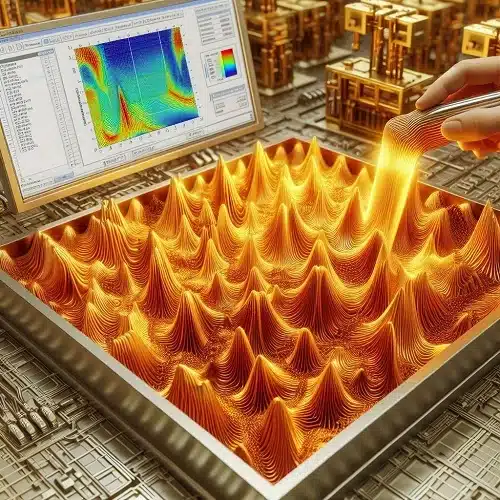
Introduction In the present blog post, we explore the complexities of simulating Additive Manufacturing (AM) through Abaqus, under the guidance of Saman Hosseini. Specifically, our attention centers on incorporating the Goldak heat source model to conduct an in-depth examination of the thermal and mechanical facets of AM processes. Goldak heat source a)scheme b)exemplary heat source […]
Plastic behavior in ABAQUS-2: Specialized Plasticity Models
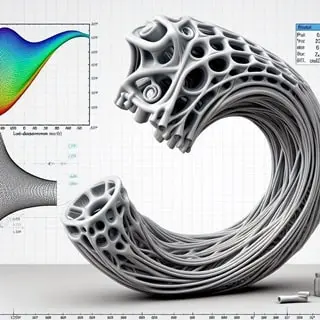
Introduction In our previous blog, we delved into the fascinating world of plastic behavior models, focusing on their application to metals and general materials. Now, get ready to take your understanding to the next level as we turn our attention to specialized plasticity models specifically designed to capture the intricate behavior of engineering materials. Plastic models […]
Plastic behavior in ABAQUS-1: Metals and General Materials
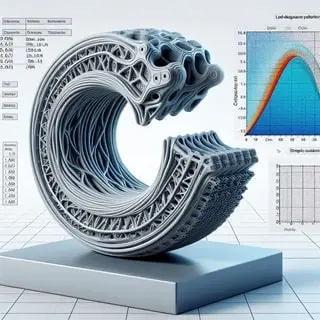
Different material behaviors The material library in Abaqus provides a wide range of options for modeling various engineering materials, such as metals, plastics, rubbers, foams, composites, granular soils, rocks, plain and reinforced concrete, and also different material behavior models including elastic and plastic behavior. Material behaviors fall into the following general categories: general properties (material […]
Troubleshooting Guide for Common Errors When Linking Abaqus with FORTRAN Compiler – Part 2

Introduction Welcome back! In Part 1, we walked you through the initial steps of linking Abaqus with a FORTRAN compiler, tackling some of the most common errors you might encounter. But sometimes, the journey to a smooth integration involves a few more bumps in the road. That’s where Part 2 comes in. In this segment, we’ll […]
Troubleshooting Guide for Common Errors When Linking Abaqus with FORTRAN Compiler – Part 1

Introduction So, you’ve just installed Abaqus and a Fortran compiler, eager to dive into complex simulations and number-crunching. But wait! Something’s gone awry. Consequently, you’re hitting roadblocks, and error messages are popping up like dandelions in spring. Abaqus Fortran linking errors can be a bit like trying to untangle a particularly stubborn knot. Consequently, […]
Additive Manufacturing
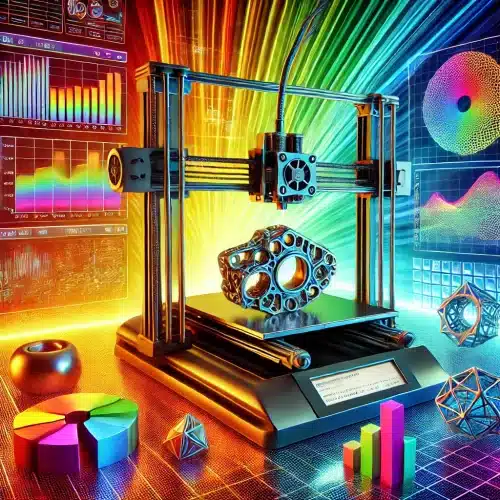
Introduction to Additive Manufacturing Additive Manufacturing (AM), commonly known as 3D printing, is a revolutionary approach to fabricating physical objects. Unlike traditional subtractive manufacturing methods, which remove material to shape an object, AM builds parts directly from digital models by adding material layer by layer. This technique allows for the precise control of materials such […]
Mastering ALE Adaptive Meshing in Abaqus: A Comprehensive Guide
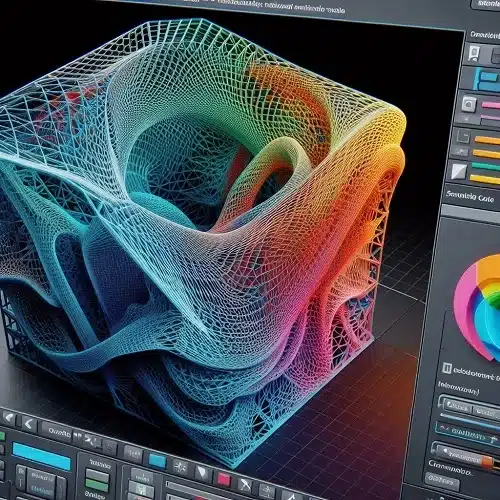
Introduction Arbitrary Lagrangian-Eulerian (ALE) adaptive meshing is a pivotal technique in computational mechanics, effectively blending the advantages of both Eulerian and Lagrangian meshing methods. This hybrid approach is particularly beneficial in Abaqus, a leading finite element analysis software, enabling robust simulations even under severe deformation scenarios. This blog delves deep into the principles of ALE […]
