

JH2 and JHB brittle damage package
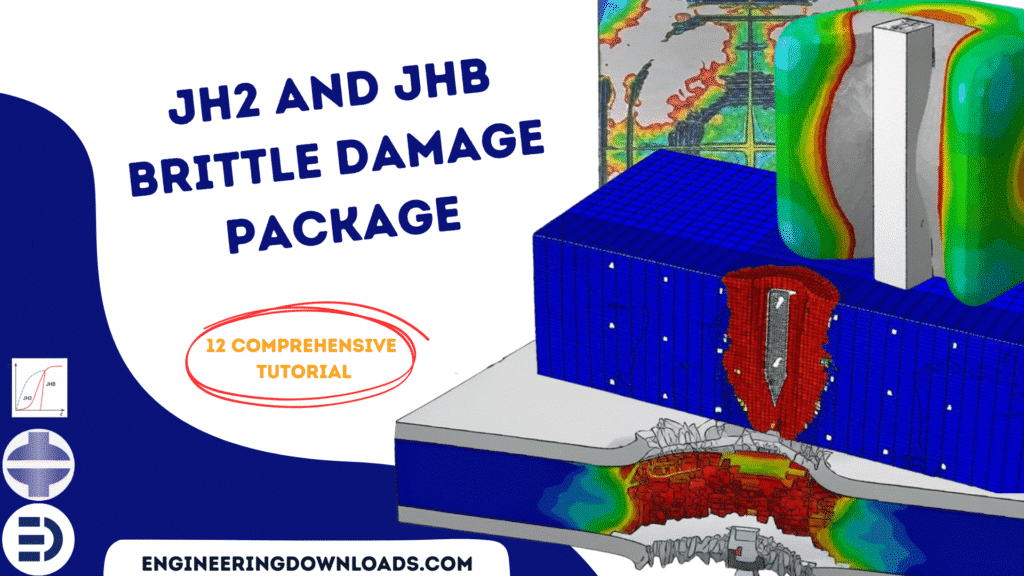
JH2 and JHB JH2 (Johnson Holmquist II) and JHB (Johnson Holmquist Beissel) material models. These are specialized constitutive models used in computational mechanics (often in hydrocode simulations like ABAQUS, LS-DYNA, AUTODYN, CTH, etc.) for representing the response of brittle materials (e.g., ceramics, glass, rocks, concrete) under large strains, high strain rates, and high pressures. This […]
Composite Analysis and Simulation Package
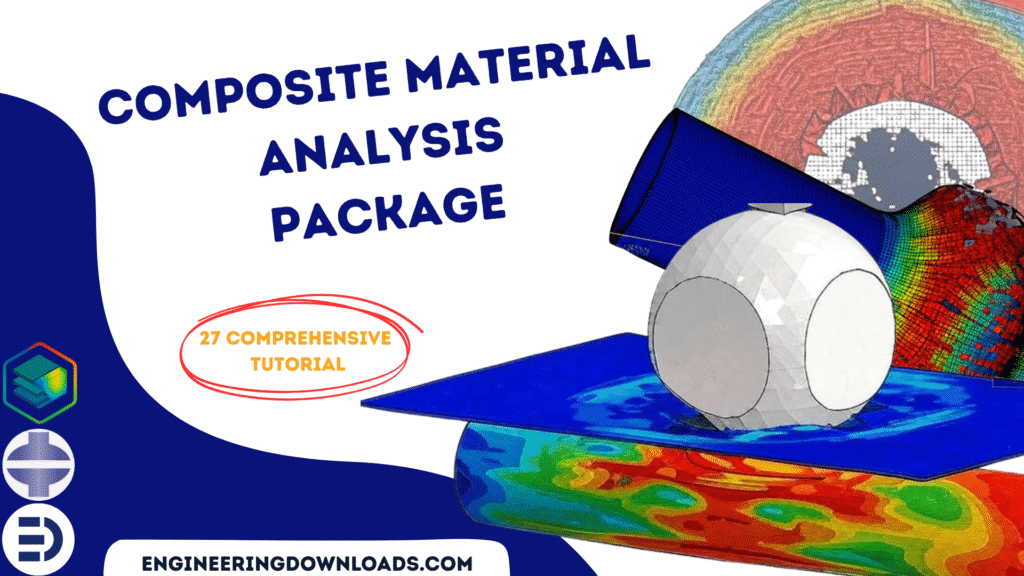
Introduction to Composite Material Analysis and Simulation Composite materials are engineered by combining two or more constituent materials with different physical and chemical properties to achieve superior performance compared to their individual components. Typically, composites consist of a matrix material (such as a polymer, metal, or ceramic) reinforced with fibers or particles (such as carbon, […]
Ceramic and Silicon Carbide Analysis Package in Abaqus
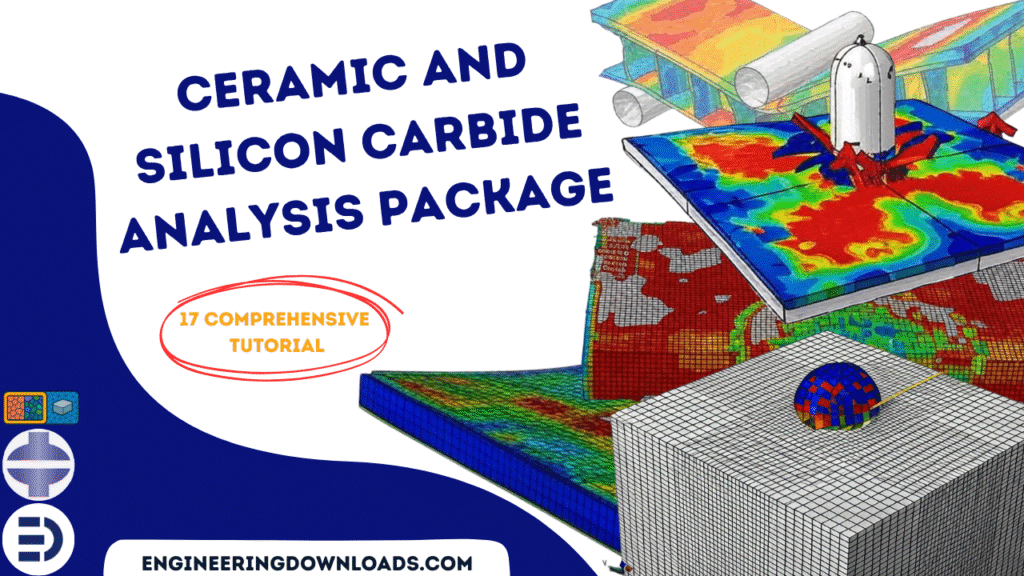
Introduction to Ceramic and Silicon Carbide Analysis Using the Finite Element Method (FEM) 1. Overview Ceramic materials, particularly Silicon Carbide (SiC), play a crucial role in advanced engineering applications where high strength, stiffness, wear resistance, and thermal stability are required. However, their brittle nature and complex failure mechanisms make experimental characterization difficult and expensive. Therefore, […]
Analysis of ceramic UHMWPE armor penetration resistance against ballistic bullet impact
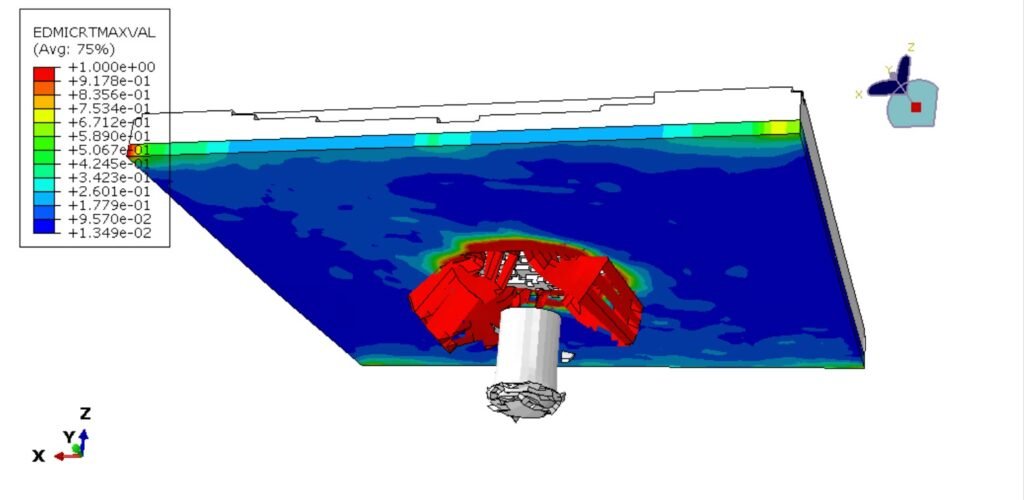
Introduction to Ceramic UHMWPE Armor: Lightweight Ballistic Protection The analysis of ceramic–ultra-high molecular weight polyethylene (UHMWPE) composite armor systems has become a prominent area of research due to the growing demand for lightweight ballistic protection with high energy absorption capability. Conventional metallic armor, while effective, imposes weight penalties that limit mobility and reduce system efficiency […]
َAir blast analysis of PEEK/ceramic/gelatin composite for finding behind the armor trauma
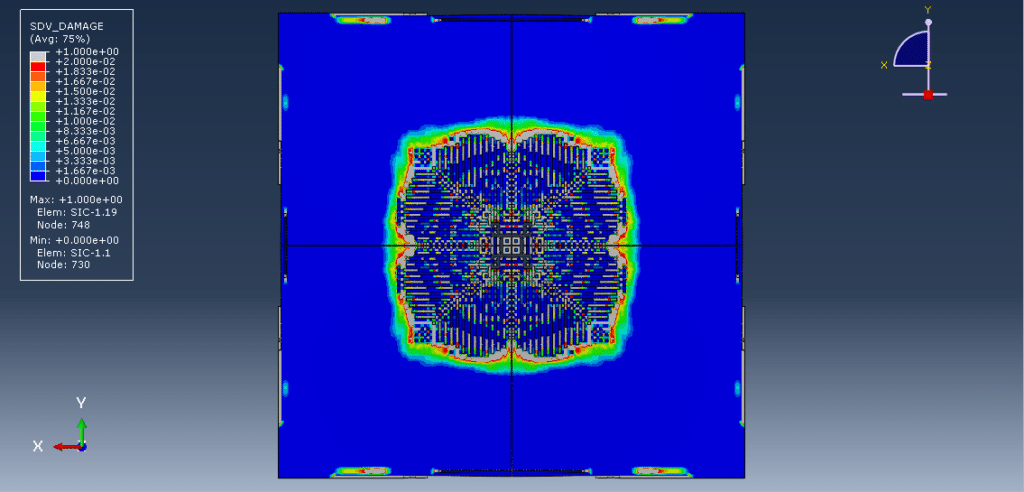
َAir blast analysis of PEEK/ceramic/gelatin composite for finding behind the armor trauma In this tutorial, the air blast simulation of a PEEK/ceramic/gelatin composite is investigated in Abaqus to evaluate behind armor trauma (BAT). The composite structure consists of three layers: a thin polyether-ether-ketone (PEEK) solid layer at the front to protect the underlying layers, a […]
Analysis of ceramic plates as shielding for the UHPC panel against projectile penetration
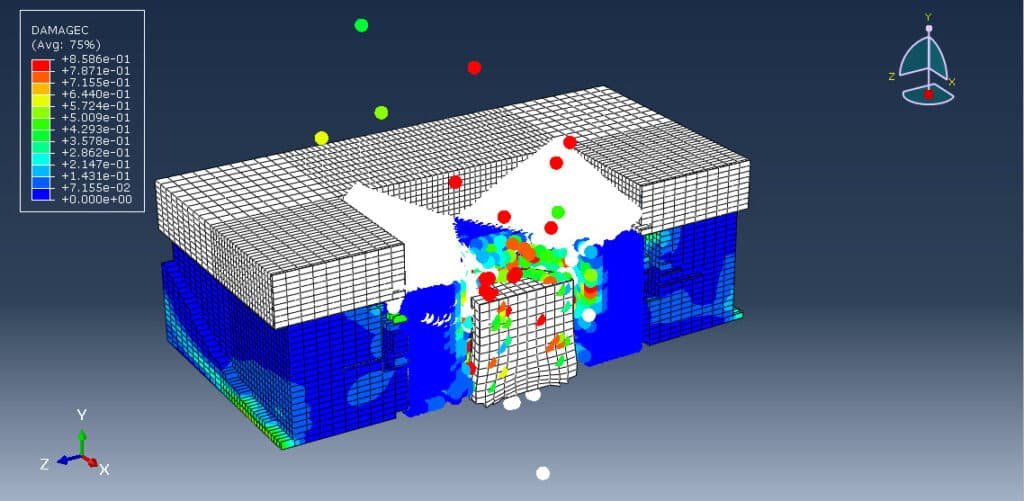
Introduction In modern protective structures, the threat posed by high-velocity projectiles—whether from military weaponry or industrial accidents—has necessitated the development of advanced armor systems. Among these, Ultra-High-Performance Concrete (UHPC) has emerged as a promising material due to its exceptional compressive strength, ductility, and energy-absorbing capabilities. However, UHPC alone may not provide sufficient resistance against high-speed […]
Influence of different back laminate layers on ballistic performance of ceramic composite armor
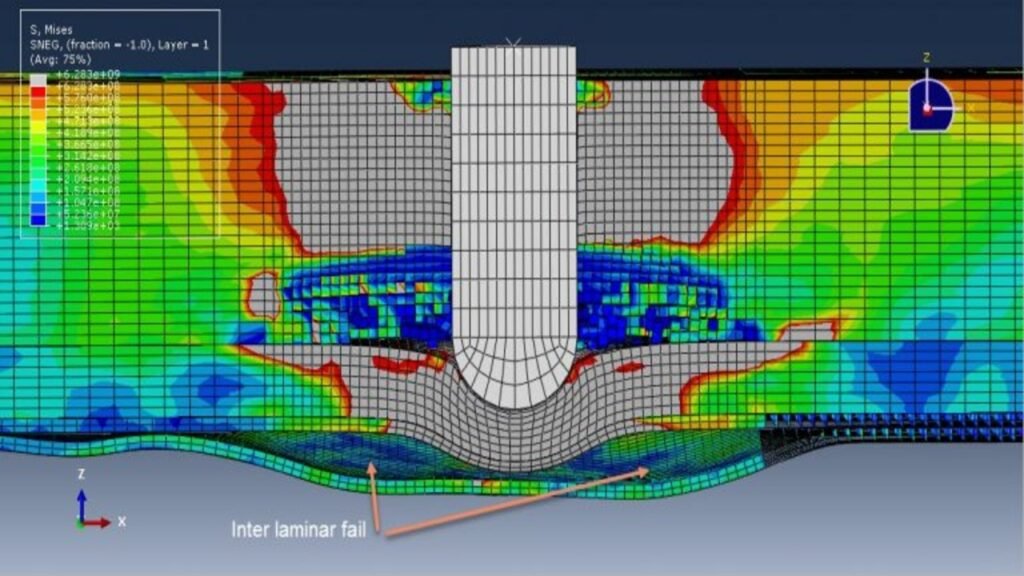
Papers abstract: This paper mainly reported a new type of ceramic composite armor with a back laminate of Ti6Al4V/UHMWPE/Ti6Al4V against the 12.7 mm armor piercing projectile at a velocity of 818 m/s. The mechanism of the whole ceramic composite armor against the projectile, and the function of each layer in the back laminates were systematically […]
Analysis of a composite panel(CFRP-Ceramic-GFPP) under air blast load
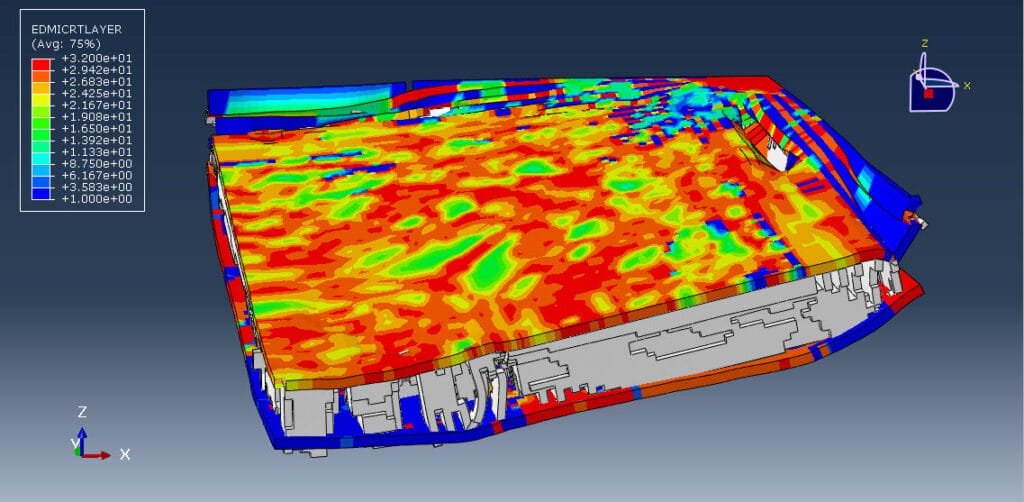
Introduction: In modern engineering, multi-layer composite panels are widely used in defense, aerospace, and infrastructure due to their high strength-to-weight ratio, damage tolerance, and energy absorption capabilities. With increasing threats from blast and impact loading, it’s crucial to assess the performance of these panels under extreme dynamic conditions, such as an air blast explosion. This […]
Analysis and simulation of high-velocity impact on a Composite panel(CFRP-Aluminum foam-Aluminum honeycomb-CFRP)
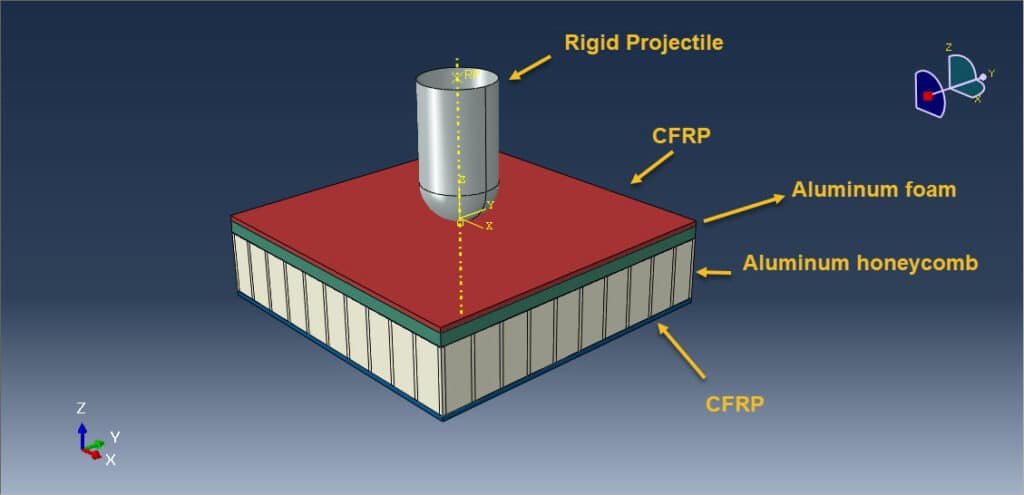
This study presents a comprehensive finite element simulation of a high-velocity impact on a hybrid composite sandwich panel consisting of Carbon Fiber Reinforced Polymer (CFRP) face sheets, an aluminum foam core, and an aluminum honeycomb mid-layer. The structural configuration aims to maximize energy absorption and minimize damage propagation under extreme dynamic loads. A spherical projectile […]
